What changed on 1 January 2026
Since 1 January 2026, a new combustion or plug-in hybrid company car ordered in Belgium is no longer deductible at all. Zero. Depreciation, servicing and fuel no longer pass as professional expenses for a company. This is the end point of the timetable set out by the Belgian law of 25 November 2021 on the fiscal and social greening of mobility.
The list price says one thing; the tax regime says another. A combustion saloon at €61,468 and an electric car at €65,300 are not separated by €3,832: they do not sit in the same regime.
Which rate for which order date?
| Order date | Combustion or hybrid | Electric |
|---|---|---|
| Before 01/07/2023 | Formula 120% − (0.5% × coefficient × CO2), floor 50% | 100% |
| From 01/07/2023 to 31/12/2025 | Cap 50% in 2026, 25% in 2027, 0% from 2028 | 100% |
| In 2026 | 0% | 100%, locked for the ownership period |
| In 2027 | 0% | 95% |
One exception survives until 31 December 2026: a self-employed person taxed as an individual keeps the right to deduct the costs of a plug-in hybrid emitting at most 50 g of CO2 per kilometre. That tolerance disappears on 1 January 2027.
Why 2026 is the last model year at 100%
An electric car ordered in 2026 locks in a 100% rate for the whole ownership period of the vehicle. From 1 January 2027, the rate applicable to new orders drops to 95%, then 90% in 2028, 82.5% in 2029, 75% in 2030, and settles at 67.5% from 2031.
In other words: the difference between signing in December 2026 and in January 2027 is paid over the entire contract, not over a single financial year.
The CO2 contribution, the other slope
The social charge follows the same movement. For any combustion or hybrid car ordered since 1 July 2023, the multiplier applied to the CO2 solidarity contribution paid to the ONSS rose to 4 in 2026, against 2.25 in 2023. It will reach 5.5 in 2027. On an electric car, the contribution stays at the floor, €42.34 a month for a vehicle ordered since 1 July 2023.
VAT has not moved: it remains deductible up to 50% for a passenger car, even an electric one, with a flat rate of 35% generally accepted without justification.
The benefit in kind is calculated, not estimated
The official formula is: [ list value × depreciation coefficient × 6/7 ] × [ 5.5 + ( vehicle CO2 − reference CO2 ) × 0.1 ] / 100.
The 2026 reference emissions were set by the Royal Decree of 17 December 2025, published in the Belgian Official Gazette of 24 December 2025: 70 g/km for petrol, LPG and natural gas, 58 g/km for diesel. They lose one gram compared with 2025, which mechanically raises the taxable benefit. For an electric car, no CO2 reference applies: the floor rate of 4% is used.
What it changes in practice
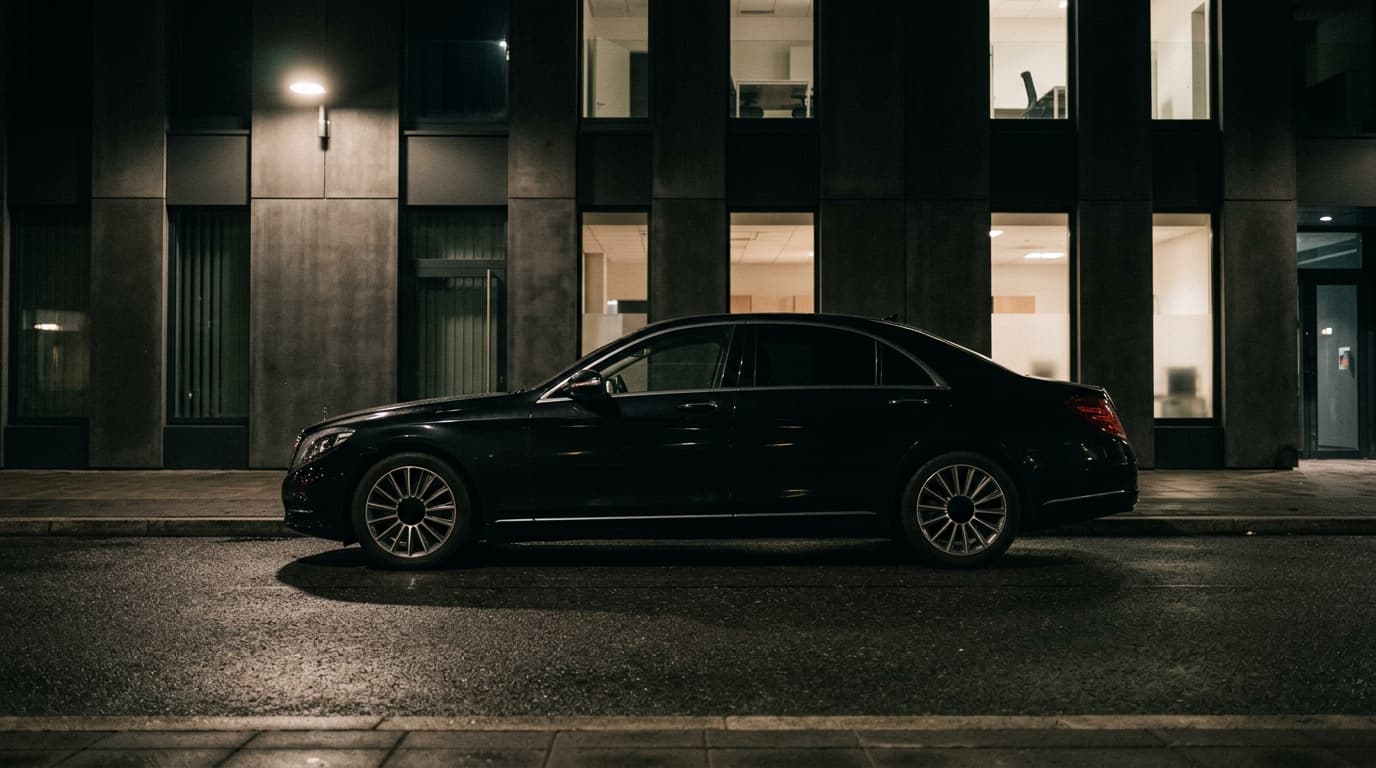
Of the eight models tracked in our luxury car ranking, six are electric. That is not an editorial stance: it is the direct consequence of the regime. The two remaining combustion cars, the Mercedes-Benz Classe E from €61,468 and the Classe S from €123,904, keep qualities of their own — the Classe E is the Autovista 2025 winner among large saloons — but ordered by a company in 2026, they are no longer deductible.
Their place is in a private purchase. For everything else, the company car guide works through the calculation line by line.
Sources
- Belgian law of 25 November 2021 on the fiscal and social greening of mobility, Belgian Official Gazette.
- Moniteur Automobile, “Déductibilité fiscale : règles en 2026”, published 1 April 2026, consulted 2 August 2026.
- Royal Decree of 17 December 2025, Belgian Official Gazette of 24 December 2025, 2026 reference CO2 emissions.
- FPS Finance, company cars, consulted 2 August 2026.
Comparator
Compare voitures de luxe side by side.
Compare now →
Frequently asked questions
Renaud a passé neuf ans comme gestionnaire de parc chez un loueur longue durée belge, du côté où l'on calcule la valeur résiduelle d'une berline allemande à 48 mois avant même de la commander. Il a quitté le métier en 2020 et écrit depuis sur le haut de gamme, depuis Namur.